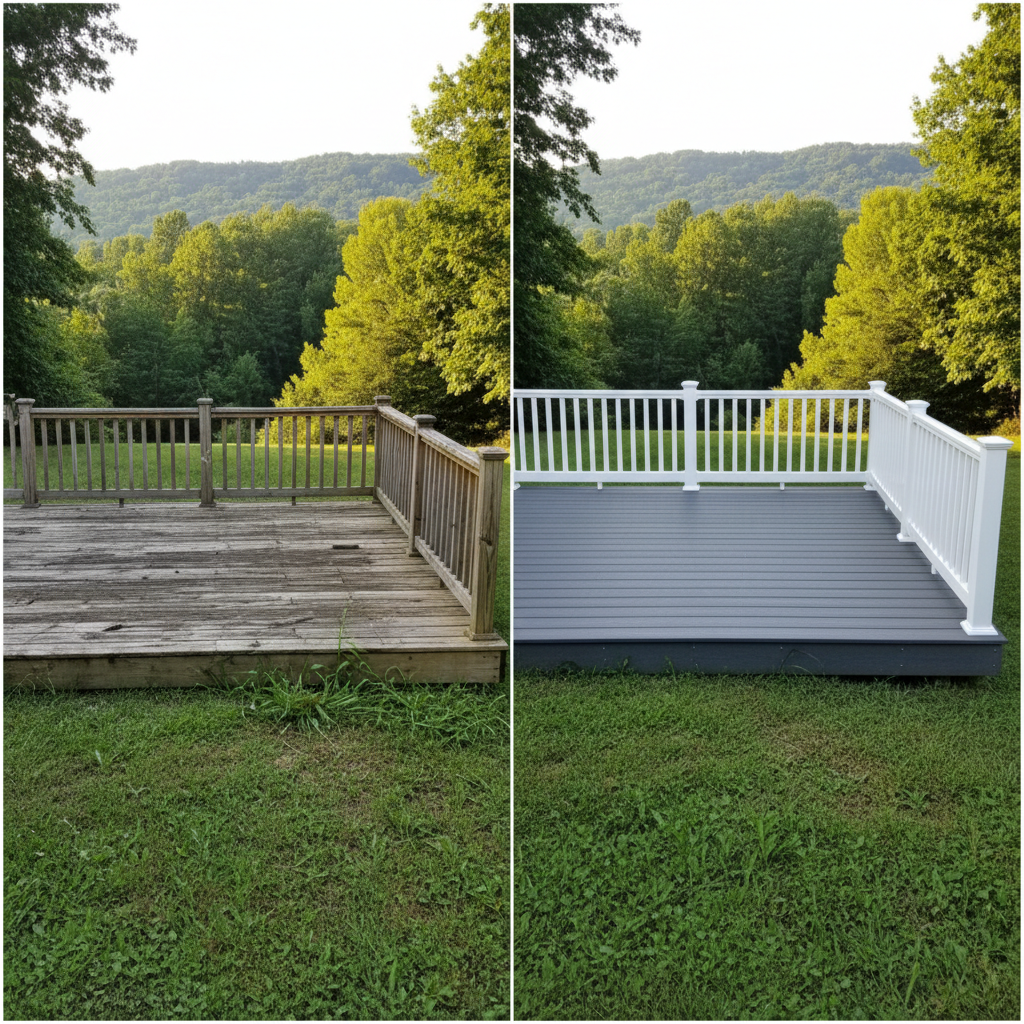
So, you're thinking about composite decking for your backyard. Good call. It's a fantastic alternative to wood, especially here in East Tennessee where our humid weather just loves to warp and rot natural lumber. But here's the thing: not all composite is the same. You've really got two main types to pick from: capped and uncapped.
What's the Big Deal, Anyway?
Imagine uncapped composite as the original version. It's a blend of wood fibers and plastic, often recycled, all pressed together. When it first hit the market, it was a huge step up from wood because it didn't rot, splinter, or need staining. Pretty impressive, right?
Then came capped composite. This is the newer generation. Basically, it's an uncapped board that's been wrapped with an extra, super-durable plastic shell around three or all four sides. This cap is usually made from a different, tougher polymer than the core. Think of it like putting a really tough, protective skin on the board itself.
Durability: Where the Cap Really Shines
This is probably the main reason capped composite took over. Uncapped boards, even though they were better than wood, still had some weak spots. Since they had exposed wood fibers, they could still soak up a bit of moisture. That meant things like spilled BBQ sauce, red wine, or even mildew could stain them if you didn't clean them fast. They might also fade over time from our strong Tennessee sun, especially up on the ridge where it just beats down all day.
Capped composite? That protective shell changes everything. It's built to resist fading, scratching, and staining like crazy. So you worry less about spills and won't see as much color degradation over the years. Many manufacturers even offer 25-year or lifetime warranties on the cap's performance, which really tells you how much faith they have in it.
Maintenance: Less Work, More Fun
Nobody wants to spend their weekends scrubbing a deck, do they? With uncapped composite, you'd still need to give it a good wash every year or so to keep mildew away and make it look nice. If you spilled something, you had to get to it quickly, just like with wood, or it might leave a mark.
Capped composite is a dream for folks who want low maintenance. That shell makes it super easy to clean. A quick sweep, maybe a hose down, and it looks good as new. Spilled something? Just wipe it up. The cap acts as a barrier, stopping liquids from soaking into the wood fibers. This is a huge plus for families or anyone who just wants to enjoy their deck without constant upkeep.
Appearance: Mostly a Matter of What You Like
Early uncapped composites sometimes looked a little... plastic-y. They've gotten better, sure, but they still tend to have a more uniform, less natural appearance. And, as I mentioned, they don't always hold their color as well over many years.
Capped composites have come a long way in looking like real wood. Manufacturers are doing incredible things with grain patterns, multi-tonal colors, and even matte finishes that look strikingly like genuine hardwood. Plus, they offer a wider range of colors and styles that keep their vibrancy much longer, all thanks to that protective cap. If you're after that rich, deep color that truly lasts, capped is usually the way to go.
Cost: The Initial Investment
Alright, let's talk about money. Uncapped composite is generally cheaper per linear foot than capped composite. It's older technology, so it makes sense that it costs a bit less to produce.
Capped composite will have a higher upfront cost. There's no way around it. You're paying for that advanced technology, the extra layer of protection, and the extended warranty. But here's what I tell people all the time: think long-term. When you factor in less maintenance, a longer lifespan, and how much better it's going to look 10 or 15 years down the road, that initial price difference often evens out. Sometimes, it even makes capped a better value overall. You won't be spending money on special cleaners or wasting time trying to get out stains. Here at Valley Deck Inc, we really believe in quality that lasts.
My Recommendation for Seymour Homeowners
Listen, I've built a lot of decks around here, from the older homes in Kodak to the newer developments off Chapman Highway. Given our climate — the hot, humid summers, the occasional heavy snow, and that constant sun exposure — my strong recommendation is almost always capped composite decking.
The benefits in terms of durability, stain resistance, fade resistance, and low maintenance just make it the smarter choice for a beautiful, long-lasting deck right here in East Tennessee. You'll spend more upfront, yes, but you'll get a deck that looks fantastic for decades with minimal effort. That extra time enjoying your outdoor space is worth every penny, don't you think?